

Most companies spend thousands on hiring the right people — and then almost nothing on keeping them sharp. That’s a mistake. The types of corporate training you choose can directly affect productivity, employee retention, and your bottom line.
At Florence Fennel, we believe that learning doesn’t stop after onboarding. The workplace is always changing, and your people need the tools to keep up. Whether you’re building a training program from scratch or improving what you already have, this guide covers everything you need to know — from the most common employee training types to the methods that actually stick.
Why Corporate Training Programs for Employees Matter More Than Ever
Here’s a number worth paying attention to: Companies that invest in employee learning see 24% higher profit margins compared to those that don’t, according to the Association for Talent Development.
But corporate training isn’t just about profits. It’s about building a team that feels confident, capable, and valued.
Here’s what strong corporate training programs for employees actually deliver:
- Higher retention rates — Employees stay longer when they see growth opportunities
- Better performance — Trained employees make fewer mistakes and work faster
- Stronger culture — Learning creates connection between teams
- Reduced costs — It’s cheaper to train existing staff than to hire and onboard new ones
- Compliance and safety — Proper training keeps your business legally protected
Without a solid training plan, even talented employees plateau. And when that happens, they start looking elsewhere.
The Most Common Types of Corporate Training (And When to Use Each)
Not all training is the same. Different goals call for different approaches. Here’s a breakdown of the main employee training types and what they’re best suited for.
1. Onboarding and Orientation Training
This is where every employee journey begins. Onboarding training introduces new hires to your company culture, policies, tools, and team structure.
Done right, onboarding reduces time-to-productivity by up to 50%. Done wrong, it leaves people confused and disengaged from day one.
Best for: New hires, role transitions, mergers
Tips:
- Don’t cram everything into day one — spread it over 30–90 days
- Assign a buddy or mentor alongside formal training
- Use a mix of documents, video walkthroughs, and live Q&A sessions
2. Skills Development Training
This is one of the most valuable types of corporate training for long-term employee growth. It focuses on building specific technical or soft skills that employees need to do their jobs better.
Employee skill development programs can include anything from Excel training for finance teams to communication workshops for managers.
Examples of skills development areas:
- Data analysis and reporting tools
- Project management methodologies (Agile, Scrum)
- Customer service techniques
- Leadership and decision-making
Best for: Existing employees who need to grow in their current roles or prepare for promotions
3. Compliance and Safety Training
Every business — regardless of size — needs this. Compliance training covers legal requirements, workplace safety, data privacy regulations (like GDPR), and industry-specific standards.
Skipping this isn’t just risky. It’s potentially illegal.
Best for: All employees, especially in healthcare, finance, construction, and tech industries
Pro tip: Make compliance training interactive. Quizzes and scenario-based exercises are far more effective than long PDFs.
4. Leadership and Management Training
Strong managers don’t just happen. They’re developed. Leadership training helps employees step into managerial roles with confidence — and helps existing leaders get even better.
This type of training often includes coaching styles, conflict resolution, performance review techniques, and team motivation strategies.
Best for: High-potential employees, new managers, senior leaders
5. Product and Service Training
Your sales team, customer support staff, and even your marketers need to know your product inside and out. Product training ensures everyone speaks the same language when talking to customers.
Best for: Sales, customer success, and support teams — especially after new product launches
6. Diversity, Equity, and Inclusion (DEI) Training
DEI training helps employees understand unconscious bias, inclusive communication, and how to create a respectful workplace for everyone.
It’s not just a trend. A McKinsey report found that companies in the top quartile for diversity are 36% more likely to outperform on profitability.
Best for: All employees across every level of the organization
7. Technical and IT Training
As technology evolves, your team needs to evolve with it. Technical training covers software tools, cybersecurity awareness, coding skills, and platform-specific knowledge.
Best for: Tech teams, but increasingly relevant for all departments as digital tools become standard
Workplace Training Methods: How You Deliver Matters As Much As What You Teach

Even the best content falls flat if it’s delivered the wrong way. Choosing the right workplace training methods is just as important as choosing the right topics.
Here are the most effective delivery formats:
Instructor-Led Training (ILT)
The traditional classroom-style setup. Works well for complex topics that require real-time questions and group discussion. Can be in-person or virtual.
E-Learning and Online Modules
Self-paced, accessible anytime. Perfect for distributed or remote teams. Platforms like Coursera, LinkedIn Learning, or custom LMS tools make this scalable and cost-effective.
On-the-Job Training (OJT)
Learning by doing. Employees pick up skills while performing real tasks, often alongside a more experienced colleague. Highly effective for hands-on roles.
Blended Learning
A mix of online modules and live sessions. This approach combines the flexibility of digital content with the engagement of in-person interaction.
Coaching and Mentoring
One-on-one development. Great for leadership growth, performance improvement, and personalized career development.
Simulations and Role-Playing
Used heavily in sales, customer service, and safety training. Real-world scenarios in a low-risk environment build confidence fast.
Comparison Table: Types of Corporate Training at a Glance
|
Training Type |
Best For | Delivery Method |
Time Investment |
|
Onboarding |
New hires | Blended (in-person + digital) | 30–90 days |
|
Skills Development |
All employees | E-learning + workshops | Ongoing |
|
Compliance & Safety |
All employees | Online modules + quizzes | Annual refreshers |
|
Leadership Training |
Managers & leads | Coaching + ILT |
Monthly sessions |
| Product Training | Sales & support | In-person + video |
Per product launch |
| DEI Training | All employees | Workshops + e-learning |
Quarterly |
| Technical/IT Training | Tech + all staff | E-learning + hands-on labs |
Ongoing |
Best Training Methods for Employees: What Actually Works
Many companies default to long slide decks and hour-long videos. That rarely works. Research shows that people retain only 10% of what they read and 65% of what they see combined with discussion.
Here are the best training methods for employees that actually lead to behavior change:
- Microlearning — Short, focused lessons (5–10 minutes) delivered regularly. Easier to fit into a busy schedule and far better for memory retention.
- Spaced Repetition — Reviewing content at increasing intervals reinforces learning over time. Great for compliance or technical knowledge.
- Gamification — Points, badges, leaderboards. Adding game mechanics boosts engagement and completion rates significantly.
- Social Learning — Peer-to-peer knowledge sharing through forums, Slack channels, or team discussions. Encourages a culture of continuous learning.
- Performance Support Tools — Job aids, quick-reference guides, or embedded help in software tools. These support employees right when they need it, not just during a training session.
Common Mistakes in Corporate Training Programs
Even well-intentioned training can miss the mark. Here are the mistakes to avoid:
- One-size-fits-all approach — Different roles need different content. A developer and a sales rep have very different learning needs.
- No follow-up or reinforcement — Training that ends with a single session rarely sticks. Build in practice, review, and feedback loops.
- Ignoring learning styles — Some people learn best visually, others by doing. Mix your formats.
- No measurement or feedback — If you don’t track results, you can’t improve. Use assessments, surveys, and performance data.
- Training as a box-ticking exercise — Employees can tell when a company doesn’t really care about their growth. Make it meaningful or don’t bother.
How to Build an Effective Employee Training Program: Step-by-Step
If you’re starting from scratch or doing a full overhaul, here’s a simple process that works:
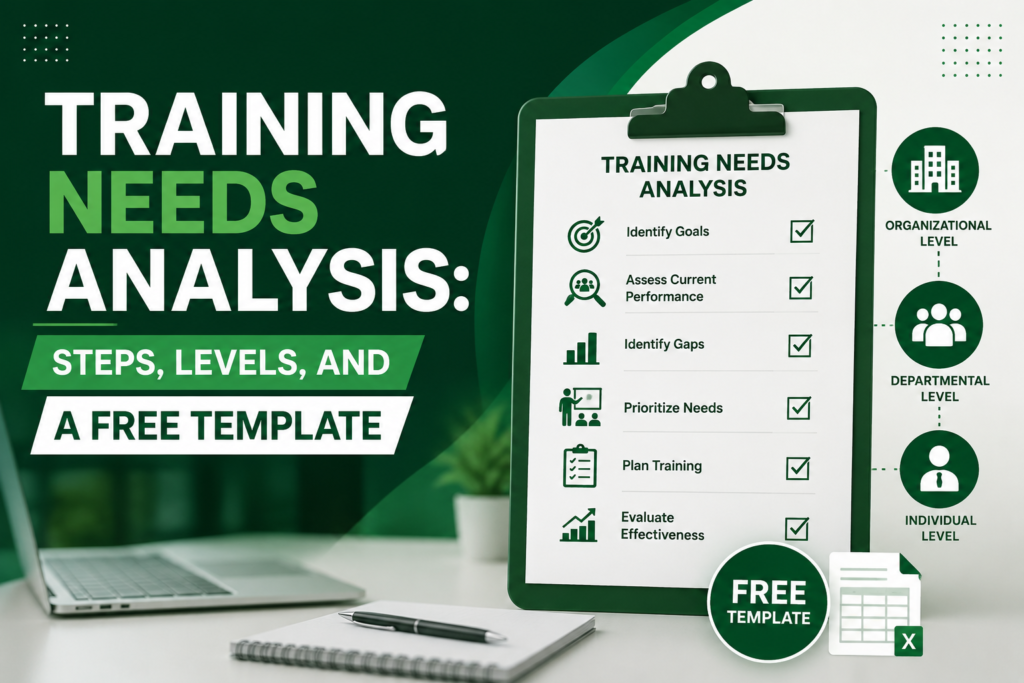
Step 1 — Identify skill gaps. Talk to managers, run surveys, and review performance data. Where are employees struggling most?
Step 2 — Define clear goals. What should employees know or be able to do after training? Make these outcomes measurable.
Step 3 — Choose the right training type. Match the content to the right format (see comparison table above).
Step 4 — Design or source the content. Build it internally or use a trusted platform. Make sure it’s relevant, up-to-date, and engaging.
Step 5 — Deliver and support. Roll out the training with proper scheduling, reminders, and manager involvement.
Step 6 — Measure the results. Use pre/post assessments, performance reviews, and employee feedback to evaluate impact.
Step 7 — Improve and repeat. Training is never “done.” Review and update your programs regularly.
ALSO READ: How to Create an Employee Training Program
Conclusion
Choosing the right types of corporate training is one of the smartest investments a business can make. When employees grow, businesses grow. It’s that simple.
From compliance training to leadership development, each type of training serves a specific purpose. The key is matching the right program to the right people — and delivering it in a way that actually engages them.
At Florence Fennel, we’re committed to helping organizations build stronger, more capable teams through thoughtful learning strategies. Whether you’re just getting started or looking to level up your existing programs, now is the right time to take action.
Ready to build a training culture that drives real results? Start by auditing your current training gaps and choosing one program to improve this quarter. Small steps create big changes.
Frequently Asked Questions (FAQs)
Q1: What are the main types of corporate training?
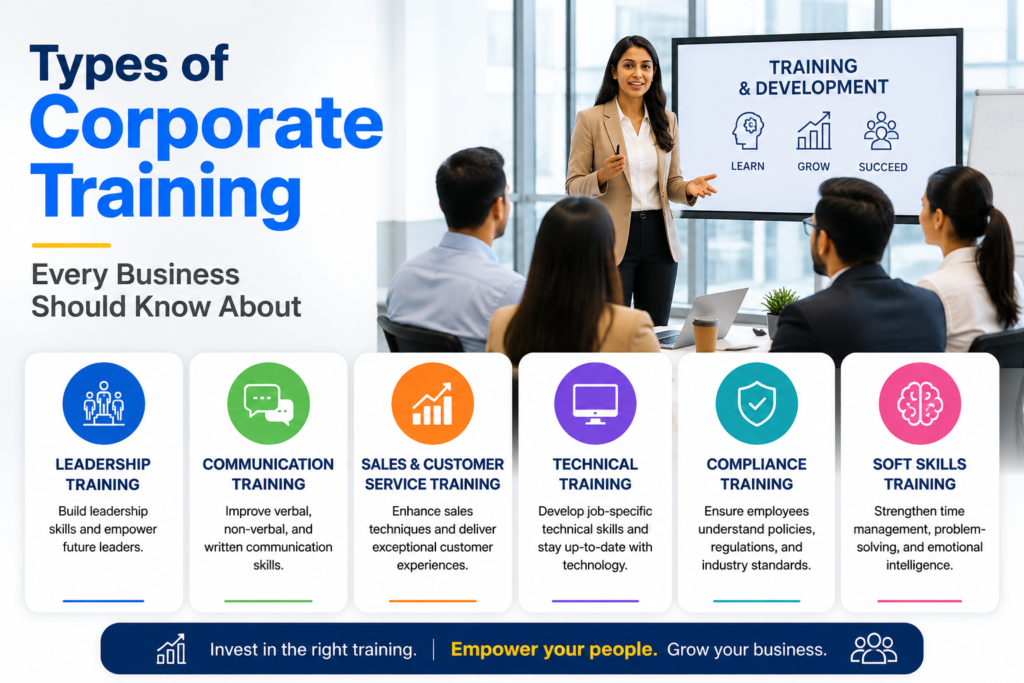
The main types of corporate training include onboarding training, skills development, compliance training, leadership training, product training, DEI training, and technical/IT training. Each serves a different purpose and works best for specific roles or goals.
Q2: What are the most effective corporate training programs for employees?
The most effective corporate training programs combine clear learning objectives with engaging delivery methods. Blended learning, microlearning, and coaching consistently outperform traditional lecture-only formats. The best programs are tailored to specific employee roles and measured for results.
Q3: How do I choose the right types of employee training for my team?
Start by identifying skill gaps through surveys, performance reviews, and manager feedback. Then match each gap to the appropriate training type — for example, use compliance training for legal requirements and skills development programs for career growth.
Q4: What are the best training methods for employees in remote teams?
E-learning platforms, virtual instructor-led training (VILT), microlearning modules, and social learning through online communities work best for remote teams. The key is flexibility and accessibility across time zones.
Q5: How often should companies run employee skill development programs?
Ideally, employee skill development should be ongoing rather than a one-time event. Plan for annual compliance reviews, quarterly skills workshops, and monthly micro-learning sessions to keep learning consistent and relevant.
Q6: What is the difference between workplace training methods and types of corporate training?
Types of corporate training refers to what you’re teaching (onboarding, compliance, leadership, etc.). Workplace training methods refer to how you teach it (e-learning, ILT, coaching, simulations). Both matter — you need the right topic delivered in the right format.
Q7: How can small businesses build effective corporate training programs?
Small businesses can start lean. Use free platforms like Google Workspace or low-cost LMS tools. Focus on the highest-priority gaps first. Peer mentoring, on-the-job training, and curated online courses are cost-effective starting points.
Q8: How do you measure the success of employee training types?
Measure training success using pre- and post-assessments, employee satisfaction surveys, on-the-job performance changes, and business KPIs like error rates, sales numbers, or customer satisfaction scores. The Kirkpatrick Model is a widely used framework for this.