

Most training programs fail for one simple reason. They pick one format and force everyone into it. Some people learn best in a classroom. Others learn best online, at their own pace. Blended learning in corporate training solves this problem by mixing both.
In this guide, you’ll learn what a blended training approach looks like in real life. You’ll also get simple blended learning strategies you can start using this quarter. At Florence Fennel, we’ve seen this model help teams learn faster and remember more through our corporate training programs. So let’s break it down step by step.
What Is Blended Learning in Corporate Training?
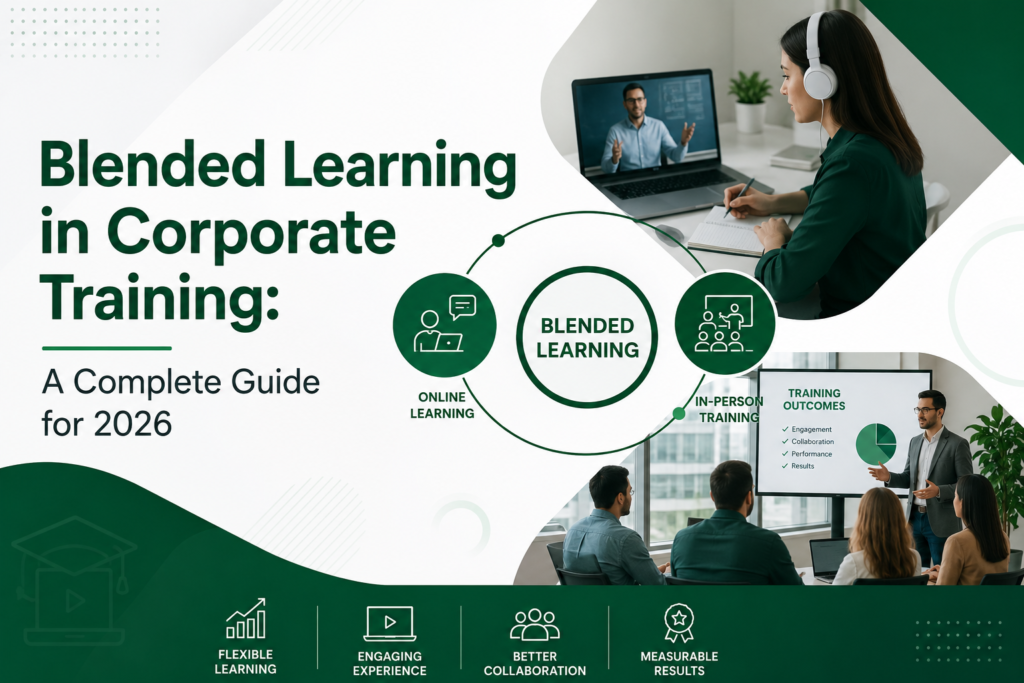
Blended learning in corporate training is a method that combines live, instructor-led sessions with self-paced online learning. Employees attend workshops or virtual classes for discussion and practice. Then they use videos, quizzes, and digital modules to learn theory on their own time. The mix improves engagement, retention, and flexibility.
Think of it like a gym plan. A personal trainer guides you during sessions. But you also work out on your own between visits. Both parts matter.
The same idea applies at work. Live sessions build skills through practice and feedback. Online modules cover facts, rules, and background knowledge. Together, they create one complete learning journey.
Why Companies Are Moving to a Blended Training Approach
Old-style training had a big flaw. Employees sat in a room for a full day. Then they forgot most of it within a week. Research on the forgetting curve shows people lose much of what they learn without review.
A blended training approach fixes this in three ways.
First, it spaces learning out. Short online lessons before and after live sessions help the brain store information. As a result, people remember more.
Second, it respects people’s time. Employees can finish online modules during quiet hours. So work doesn’t stop for training.
Third, it cuts costs. Companies spend less on travel, venues, and printed materials. Yet the quality of learning often goes up, not down.
Key Benefits of Blended Learning in Corporate Training
Here’s what makes this model worth the effort.
- Better retention. People review content in small chunks over time. This beats one long lecture every time.
- More engagement. Videos, quizzes, and group work keep things fresh. Boredom drops, and attention rises.
- Flexibility for all learners. Fast learners move ahead. Slower learners take their time. Nobody gets left behind.
- Easy tracking. Online tools show who finished what. Managers can spot gaps early and act on them.
- Lower costs over time. After the setup phase, digital content gets reused again and again. Each new batch of employees costs less to train.
5 Blended Learning Strategies That Actually Work
You don’t need fancy tools to start. Instead, you need a clear plan. Here are five blended learning strategies that deliver results.
1. The Flipped Classroom
Send employees short videos or readings before the live session. Then use class time for practice, questions, and role-play. This way, no one wastes live time on basic theory.
2. The Rotation Model
Employees rotate between formats on a set schedule. For example, Monday is an online module. Wednesday is a group workshop. Friday is a hands-on task. The routine builds a steady learning habit.
3. Microlearning Plus Workshops
Break big topics into five-minute lessons. Deliver them through your phone or laptop. Then hold a monthly workshop to tie everything together. Small bites are easier to digest.
4. Coaching-Led Blends
Pair online courses with one-on-one coaching calls. The course teaches the skill. The coach helps each person apply it to their real job. This works well for leadership training.
5. Social Learning Loops
Add discussion boards or chat groups to your online modules. Employees share wins, ask questions, and help each other. Learning becomes a team sport, not a solo task.
How to Build a Blended Program: Step-by-Step
Ready to start? Follow these six steps.
- Set one clear goal. Pick a skill gap that hurts the business. For example, “Sales reps need better product knowledge.”
- Split the content. Put facts and theory online. Save practice and discussion for live sessions.
- Choose simple tools. A basic learning platform, video calls, and quizzes are enough to begin.
- Create a schedule. Space lessons over weeks, not days. Short and steady wins.
- Run a pilot. Test the program with one small team first. Fix what breaks.
- Measure and improve. Track completion rates, quiz scores, and on-the-job results. Then adjust.
Blended vs. Classroom-Only vs. Online-Only
|
Factor |
Classroom Only | Online Only | Blended |
|
Engagement |
High during session | Often low |
High and steady |
|
Flexibility |
Low | High |
High |
| Retention | Drops fast | Mixed |
Strong |
|
Cost over time |
High | Low |
Moderate to low |
| Human connection | Strong | Weak |
Strong |
As the table shows, blended learning in corporate training takes the best of both worlds. You keep the human touch. You also gain the reach and flexibility of digital tools.
Common Mistakes to Avoid
Even good programs can stumble. Watch out for these traps.
- Dumping content online with no plan. A folder of videos is not a course. Structure matters.
- Ignoring managers. If managers don’t support the program, employees skip it. Get leaders on board first.
- Skipping feedback. Ask learners what works and what doesn’t. Then act on their answers.
- Making modules too long. Keep online lessons under ten minutes. Attention fades fast after that.
The Future: AI and Personalized Learning Paths
Blended learning keeps evolving. In fact, AI is now reshaping how the online half of the blend works.
Modern learning platforms can track what each employee already knows. Then they suggest only the lessons that person needs. As a result, no one wastes time on content they’ve already mastered.
AI chat assistants also answer learner questions instantly, day or night. This support used to require a live trainer. Now it happens on demand.
Virtual reality is joining the mix too. Safety training, machine operation, and customer service practice all work well in VR. Employees practice risky or rare situations without real-world consequences.
None of this replaces human trainers. Instead, it frees them to focus on coaching, feedback, and discussion. The blend simply gets smarter over time.
For companies planning ahead, this means one thing. Build your blended foundation now with the right customized training programs. Then you can add these tools piece by piece, without starting over.
How Florence Fennel Can Help
Building a blended program takes planning, content design, and the right delivery mix. Florence Fennel helps organizations design corporate training programs that fit their teams, tools, and goals. Whether you’re starting fresh or fixing an old program, our team can guide each step.
Conclusion
Blended learning in corporate training isn’t a passing trend. It’s a smarter way to build skills that stick. Mix live practice with flexible online lessons. Start small, measure results, and improve as you go.
The best time to modernize your training was last year. The second-best time is now. If you need a partner for the journey, Florence Fennel is ready to help you design a program your team will actually enjoy.
FAQs
Q1. What is blended learning in corporate training?
It’s a training method that mixes live sessions with self-paced online learning. Employees learn theory through digital modules and practice skills in workshops or virtual classes. The combination improves retention, engagement, and flexibility.
Q2. What is an example of a blended training approach?
A common example is the flipped classroom. Employees watch short videos before a workshop. Then they spend the live session practicing, asking questions, and doing role-plays with a trainer.
Q3. Why is blended learning better than classroom-only training?
It spaces learning over time, which helps people remember more. It also gives employees flexibility to learn at their own pace. Plus, it cuts travel and venue costs.
Q4. What tools do I need to start blended learning?
You need three basics: a learning platform (LMS) to host content, a video call tool for live sessions, and simple quiz software to check progress. Many affordable options exist for small teams.
Q5. How do you measure the success of blended learning strategies?
Track completion rates, quiz scores, and learner feedback. Most importantly, measure job performance before and after training. Real success shows up in daily work, not just test results.