

Your team’s skills need a checkup, and waiting for a missed deadline to notice is the expensive way to find out. Knowing how to conduct a skill gap analysis helps you find exactly where your workforce falls short, so you can fix it before it costs you money or momentum. This guide walks you through what a skill gap analysis is, why it matters, and the exact steps to run one. You’ll also get a comparison table, practical tips, and mistakes to avoid.
What Is a Skill Gap Analysis?
A skill gap analysis compares the skills your employees have today with the skills your business needs to reach its goals. It’s the gap between “what we can do now” and “what we must be able to do next year.”
Every organizational skill gap analysis starts with the same question: where is your team exposed? Maybe your sales staff can’t use the new CRM. Maybe nobody understands the latest data privacy rules. Once you name the gap, you can close it through training, hiring, or a mix of both.
Why Skill Gap Analysis in Organization Settings Matters
Skipping this step is costly. Industry research from IDC suggests most global enterprises will face serious skill shortages in the near term, and unresolved skills shortages could cost the world economy trillions in lost output. Separate surveys from the World Economic Forum found that skill gaps are now one of the biggest barriers business leaders face when trying to transform how they operate.
Running a skill gap analysis in organization settings gives you:
- A clear picture of where training budgets should go
- Fewer bad hires, because you know what “good” looks like
- Faster onboarding, since new hires train against real gaps, not guesswork
- Better retention, because employees see a genuine path to grow
- Stronger succession planning for leadership roles
Beyond the list above, a clear analysis also protects you from a quieter risk: assuming you have a skill you actually don’t. Teams often discover mid-project that “someone probably knows how to do this” was never true. Catching that gap during planning is far cheaper than discovering it during delivery.
How to Conduct a Skill Gap Analysis: Step-by-Step
Here’s a practical process you can follow, whether you’re reviewing one team or the whole company.
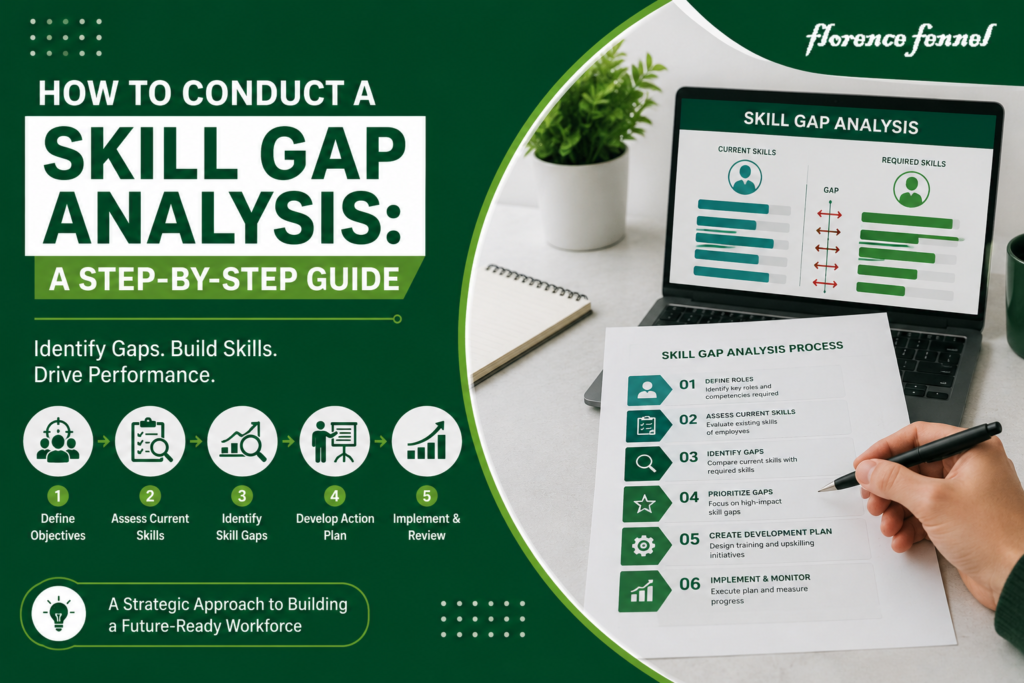
- Define your business goals. Start with where the company is headed in the next one to three years. New markets, new products, or new technology all demand new skills. Write these goals in plain language so everyone involved understands the “why” behind the exercise.
- List the skills those goals require. Break each goal into the specific skills needed to reach it. Be concrete: “data analysis in Excel” beats “analytical thinking.” Group these into technical skills, like software knowledge, and soft skills, like negotiation or communication.
- Assess current skills. Use surveys, manager reviews, skills tests, or performance data to see what your team can already do. Pick at least two data sources so you’re not relying on a single, possibly biased, view.
- Compare current skills against required skills. Line the two lists up side by side. The gaps are wherever “required” is bigger than “current.” Document these gaps by role, department, and skill so patterns are easy to spot later.
- Prioritize the gaps. Not every gap is urgent. Rank them by business impact and how many employees they affect. A gap that touches ten people and blocks a major project deserves attention before a niche skill only one person needs.
- Build a closing plan. Decide what gets fixed through training, coaching, new hires, or contractors. Set a rough timeline and owner for each gap, so the plan doesn’t sit untouched in a folder.
- Track progress and repeat. Skills change fast, so revisit this process at least once a year, and sooner for teams working with fast-moving technology.
How Long Does It Take?
For a single team, expect one to two weeks to gather data and identify gaps, plus ongoing time to act on the findings. A full workforce skills gap analysis across a larger company can take four to eight weeks the first time, since you’re also building the survey and scoring process from scratch. Later rounds move faster because the framework already exists.
Skills Gap Analysis for Employees vs. Team-Level Analysis
You can run this process at two levels, and most companies need both.
A skills gap analysis for employees looks at one person: their current role, their career goals, and what they need to learn to grow. It’s the backbone of individual development plans.
A workforce skills gap analysis looks wider, across a department or the whole company. It answers questions like “do we have enough people who can build automation workflows?” rather than “can Priya build one?” Use the individual view for coaching conversations and the workforce view for hiring and budget decisions.
ALSO READ: Best Training Courses for Employees to Improve Skills
Comparing Skill Gap Analysis Methods
| Method | Best For | Time Needed | Accuracy |
|---|---|---|---|
|
Employee self-assessment surveys |
Quick, broad snapshots | Low |
Moderate |
|
Manager evaluations |
Role-specific insight | Medium |
Moderate to High |
|
Skills testing or certification |
Technical or compliance skills | Medium |
High |
|
Performance and project data |
Ongoing, objective tracking | Low (once set up) |
High |
| 360-degree feedback | Leadership and soft skills | High |
High |
Tips and Best Practices
- Involve managers early. They see day-to-day skill use that surveys miss.
- Use more than one data source. Combining a self-assessment with a manager review catches blind spots.
- Tie every gap back to a business outcome, not just a nice-to-have skill.
- Set a realistic timeline. Closing a technical skill gap can take months, not days.
- Consider using a dedicated skills intelligence platform to automate skill assessments, scoring, and progress tracking. These tools reduce manual spreadsheet work, improve accuracy, and help organizations identify skill gaps more efficiently.
- Communicate results back to employees. People are more likely to engage with training when they understand why it was assigned to them.
Common Mistakes to Avoid
- Treating the analysis as a one-time project instead of an ongoing habit.
- Relying only on self-reported skill levels, which people tend to overrate.
- Skipping the prioritization step and trying to fix every gap at once.
- Failing to connect the findings to an actual training plan or budget.
- Ignoring soft skills like communication and problem-solving alongside technical ones.
Conclusion
A skill gap analysis turns a vague worry about “not having enough talent” into a clear, actionable plan. It gives you a shared language for talking about training, hiring, and career growth, instead of relying on guesswork or gut feel. Follow the steps above, revisit them regularly, and you’ll build a workforce that’s ready for what’s next instead of scrambling to catch up.
Ready to get started? Pull your team together this week and run through step one: define the goals that matter most for the next twelve months, then work through the rest of the process at your own pace. With the right guidance from Florence Fennel, your organization can build a focused training strategy that supports long-term business growth and employee development.
Frequently Asked Questions