

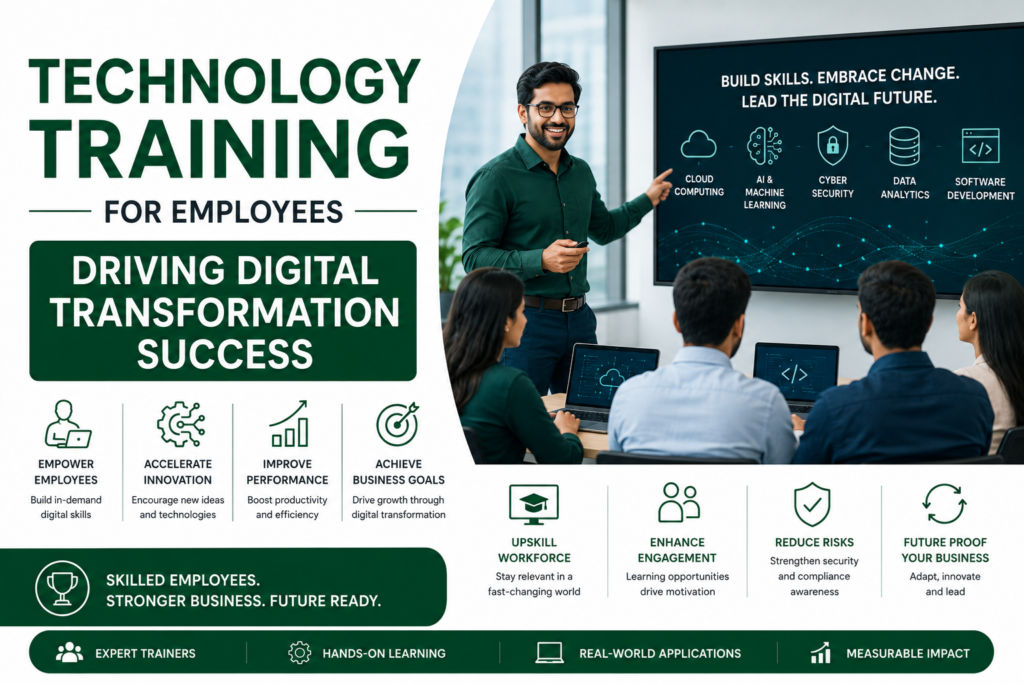
Nowadays, work changes fast because tech keeps shifting. Tools once tucked away in back offices now sit on every desk. Whoever you are in the company, your day likely touches apps, databases, or shared online spaces. When firms go digital, learning how these pieces fit isn’t extra; it matters right away. That is why employee technology training has become essential for modern businesses. Training used to feel like a sidebar; not anymore. It sits at the center, quietly shaping whether new systems stick or fade.
When companies put effort into ongoing learning, their people tend to adjust faster, work better, and stay ready when things shift. Technology training for employees helps teams gain real confidence with modern tech tools, improving daily performance while supporting long-term business growth. A broad rollout of digital skills across many employees only works if the training plan grows smoothly without losing structure.
Technology Training Importance
Out of nowhere, tech shifts how teams get things done. Not just computers – think smart software, online storage, machines that learn, ways to stay safe online, number-crunching programs – all now part of daily tasks. Because of this, workers need know-how to keep up, to actually make sense of it while doing their jobs. Staying sharp means understanding what these tools do without getting lost in them.
Why Companies Choose Tech Training
- Improves employee productivity and efficiency
- Accelerates adoption of new digital tools
- Reduces operational errors and downtime
- Strengthens cybersecurity awareness
- Enhances collaboration across teams
- Supports business growth and innovation
When staff lack good training, companies might deal with lower output, pushback on updates, more safety issues, and sluggish tech rollout. Yet firms focusing on upskilling their teams tend to shift more easily into digital ways, work better together, and feel more involved at work.
Confidence grows when people learn tech skills at work. Knowing how to run digital tools means fewer delays from glitches, leaving room for deeper focus on tasks that matter. What happens next? Less frustration, more progress—quietly, steadily.
The Growing Need for Employee IT Training
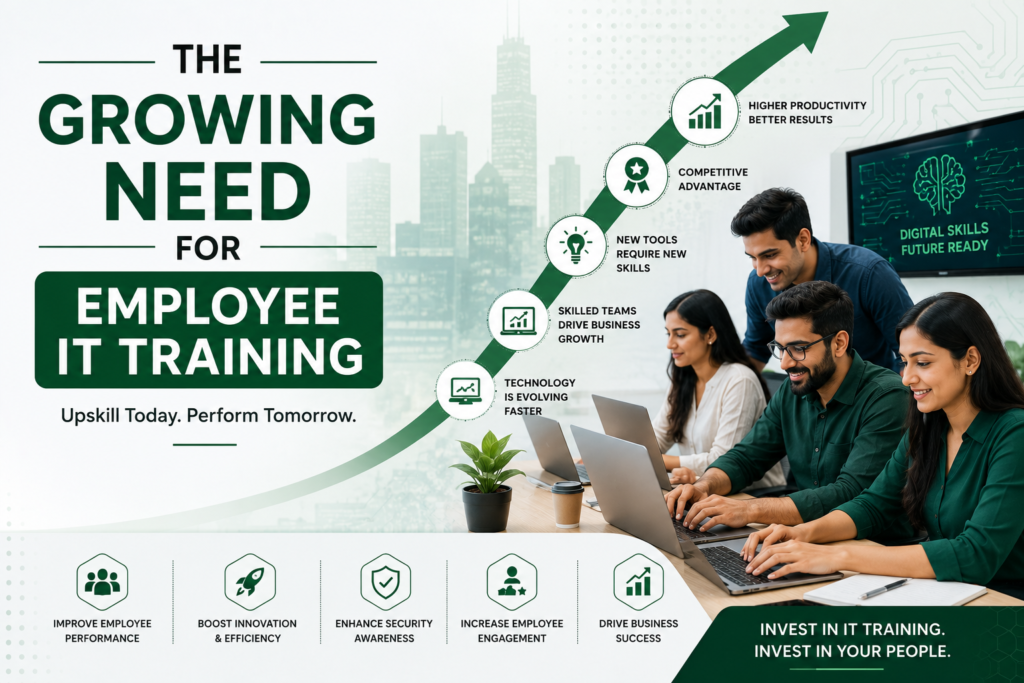
Most digital changes collapse because workers lack proper training. Tools work best once people grasp their functions—choice matters, yet comprehension drives results.
When staff get full it training for employees, they connect better with new tech tools at work. Through practice, workers figure out software steps and handle online tasks smoothly, shifting gears when the company needs change, while keeping private data secure along the way.
Topics in IT Training
- Digital workplace tools
- Cloud computing fundamentals
- Cybersecurity best practices
- Data management and analytics
- Software and platform adoption
- Remote collaboration technologies
Every time tech shifts, workers need fresh guidance—learning never stops. Because tools evolve fast, practice has to keep pace just as quickly. Staying sharp comes through regular updates, not single sessions stuck in the past. Growth happens when teams adapt daily instead of waiting for big rollouts. Skills build slowly, shaped by repetition and real tasks. Progress ties directly to how often people engage with new methods. Without steady input, knowledge fades almost immediately.
What Works in Training Employees on Technology
Most folks think just handing out courses is enough. Yet real skill growth needs doing things that matter on the job. Learning sticks better when it connects directly to daily work challenges. Useful practice beats passive watching every time. Success shows up when teams apply tools right where they operate. What counts is how well new knowledge fits actual tasks.
1. Role-Based Learning
A worker in finance often uses complex tools for numbers and data. Yet someone helping customers might rely more on chat systems or email networks. Skills shift depending on the role held.
When workers learn tech skills tied to their specific jobs, lessons stick better. Because the material matches real tasks, people pay closer attention. Learning feels less like a chore when it fits how they work each day.
2. Hands-On Practice
Practice makes progress—working through live scenarios helps staff grasp tech faster. When people try things out, like in hands-on sessions or role plays, abilities grow naturally. Learning sticks better after doing, not just listening. Real tasks boost confidence along the way.
Working directly with tools turns ideas into real skills, so staff can apply tech smoothly in everyday tasks.
3. Continuous Skill Development
Change moves fast, so staying sharp means always learning. Workers grow stronger when companies support steady chances to build tech skills step by step.
Staying ready for new tech and shifting company needs happens when teams get ongoing training. Updates show up often, keeping skills fresh through follow-up sessions. Learning paths open doors later on, building deeper knowledge over time instead of all at once.
4. Digital Literacy Foundations
Most workers must understand basic tech before using complex software. Training at the start ought to include how to communicate online, plus ways to handle data safely. Spotting cyber threats matters just as much as knowing shared platforms. Learning these steps helps people work better without constant help.
Building these key skill sets sets the stage for what comes next in learning while also helping digital changes take hold over time. A solid start here makes later steps easier to manage, even when challenges appear without warning. Each ability gained feeds into broader progress, especially when applied consistently across teams. Without this base, new tools often fail to deliver results, no matter how advanced they seem at first glance.
Expanding Tech Learning Through the Company
Working out how to train big teams on tech isn’t always straightforward. With offices scattered far and wide, along with different roles and units, keeping things uniform tends to trip people up.
Scaling training programs effectively
- Create standardized learning frameworks
- Offer flexible online and blended learning options
- Develop role-specific learning pathways
- Use assessments to track progress
- Encourage continuous learning cultures
- Measure business impact regularly
Start anywhere, go at your own pace – training works best when it fits real life. Learning materials show up whenever someone needs them, not just during set hours. Different ways of teaching help people stay involved, even if their time or style varies widely. What matters shows up in clear results, nothing vague.
What gets measured tends to improve. Tracking who joins, what skills grow, and how work changes reveals gaps worth fixing. Clear targets make it easier to see if training actually matters. Proof of progress often hides in these details.
How Workers Gain From Learning Job Skills
When workers learn new tech abilities, gains show up in places you might not first expect. A single person’s growth can ripple through the whole team. Skills built today often solve problems tomorrow. Learning shifts how tasks get done, usually for the better. Stronger know-how tends to lift confidence across roles. What one person picks up may spark ideas in another. Progress sticks when it spreads quietly.
Florence Fennel Aids Digital Skills Growth
Start smart when shaping digital skills across teams – it takes insight, careful direction, one step after another. Learning moves forward best when tied to real work goals, something Florence Fennel guides firms to build with purpose.
Florence Fennel Supports Organizational Growth
- Supports workforce digital transformation initiatives
- Develops practical technology training for employee programs
- Enhances employee readiness for emerging technologies
Learning moves forward when skills grow over time. Because practice builds ability, staying active matters. When people keep going, improvement follows naturally. Growth shows up most where effort stays steady
Aligns training outcomes with organizational goals
Start with what people can actually do. Not theory, but real tasks that matter at work today – skills shaped through practice build confidence faster than any lecture ever could. One step after another, teams grow stronger when learning sticks to daily routines instead of sitting in forgotten training modules. Think about tools already in use; mastering them changes how fast problems get solved. Instead of chasing trends, attention turns toward steady growth – small gains adding up across departments. Over time, this shifts how companies handle change, making transitions smoother because people adapt more easily. Even basic computer habits improve when guidance fits real workflows. With support tuned to actual job roles, workers stay engaged longer and apply new knowledge without delay. Technology works better when those using it understand its purpose clearly.
ALSO READ: Corporate Training Games and Activities
Conclusion
Nowhere is change felt more than in daily work routines, where tech shapes how tasks get done across departments. Because modern operations rely heavily on tools and systems, staff must keep pace just to stay effective. When learning happens in ways that stick, people handle upgrades without constant handholding. Smooth shifts into new software environments come from practice, not promises. Confidence grows when workers figure things out before problems arise.
Now more than ever, companies need skilled workers just to keep up—training teams in tech isn’t optional anymore; it shapes how fast they move, adapt, and then grow. When backed by smart guidance like what Florence Fennel offers, firms build real digital strength, one that lasts beyond the next update or trend.