


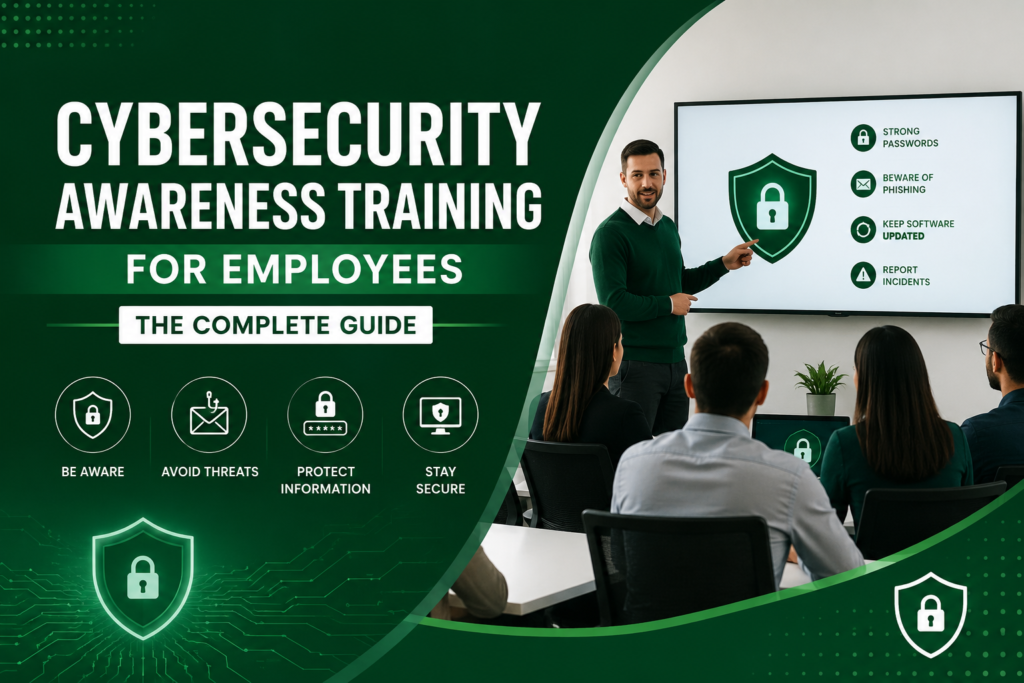
Most cyberattacks don’t begin with sophisticated hackers breaking through security systems. They start with a simple mistake, such as an employee clicking a malicious link or opening a phishing email. According to industry research, including Verizon’s annual Data Breach Investigations Report, the human element is involved in the majority of data breaches. This is why cybersecurity awareness training for employees is no longer optional. It helps employees recognize cyber threats, avoid common security mistakes, and protect your organization from costly attacks.
In this guide, you’ll learn what good training covers, how to run it, and the mistakes to avoid. Florence Fennel helps organizations build these programs, and we’ve packed our field lessons into this article.
What Is Cybersecurity Awareness Training for Employees?
Cybersecurity awareness training for employees is a structured program that teaches staff how to spot and stop digital threats. It covers phishing emails, weak passwords, unsafe links, and data handling rules. The goal is simple: turn every employee from a security risk into a security asset.
Think of it as a fire drill for the digital world. You hope the fire never comes. But everyone should know what to do if it does.
Good programs go beyond a yearly slideshow. They build daily habits through short lessons, real examples, and practice tests. Our content development team designs exactly this kind of interactive, tested material.
Why Employees Are the First Line of Defense
Companies spend big money on firewalls and antivirus tools. Yet attackers often skip all of that. Instead, they target people.
Why? Because tricking a person is cheaper than hacking a system. A fake email from “the CEO” asking for an urgent payment costs nothing to send. If one employee falls for it, the attacker wins.
Therefore, employee cybersecurity awareness training closes the gap that technology can’t. Trained staff pause before clicking. They question strange requests. They report threats instead of hiding mistakes.
That last point matters most. Fast reporting can shrink a disaster into a near miss.
Core Topics Every Training Program Must Cover
A complete program covers these seven areas.
- Phishing and social engineering. Teach staff to spot fake emails, texts, and calls. Show real examples with the red flags marked.
- Password hygiene. Cover strong passwords, password managers, and multi-factor authentication (MFA). One reused password can sink a company.
- Safe browsing and downloads. Explain the risks of unknown links, fake websites, and free software from shady sources.
- Data handling. Show who can access what data, and how to share files safely. Include rules for personal devices.
- Remote work security. Cover home Wi-Fi safety, VPN use, and locking screens in public places.
- Physical security. Remind staff about tailgating, lost badges, and papers left on desks.
- Incident reporting. Make reporting fast, simple, and blame-free. Employees should know exactly whom to call and when.
For teams that need deeper technical coverage, our dedicated cyber security training goes beyond awareness into hands-on defense skills.
Cybersecurity Awareness Training Best Practices
Content alone doesn’t change behavior. Delivery does. Follow these cybersecurity awareness training best practices to make lessons stick.
1. Keep Lessons Short and Frequent
One long annual session fails. People forget it within weeks. Instead, run short monthly lessons of five to ten minutes. Small doses build lasting habits.
2. Run Phishing Simulations
Send safe, fake phishing emails to your own staff. Track who clicks. Then coach those who fall for it without shaming them. Over time, click rates drop sharply.
3. Make It Role-Specific
Finance teams face invoice fraud. HR faces fake job applicants with infected files. Developers face code-based threats. Tailor examples to each team’s daily reality. This is where customized training makes a measurable difference, since no single program fits every team.
4. Use Stories, Not Just Rules
People remember stories about real breaches far better than policy lists. Share short case studies of attacks on similar companies.
5. Reward Good Behavior
Celebrate employees who report threats. A simple shout-out works wonders. Positive culture beats fear every time.
6. Measure and Improve
Track click rates, quiz scores, and reporting speed. Review the numbers each quarter. Then update the program based on what the data shows.
How to Launch a Program: Step-by-Step
Follow these six steps to build cybersecurity training for organizations of any size.
- Assess your risk. List your top threats. Phishing? Weak passwords? Remote work gaps? Start where the danger is greatest.
- Get leadership buy-in. When managers take the training too, employees take it seriously.
- Pick your format. Blend short e-learning modules with live sessions and simulations. Mixed formats keep attention high.
- Start with the basics. Phishing and passwords first. These two areas stop the most common attacks.
- Schedule regular refreshers. Monthly micro-lessons plus quarterly simulations work well for most teams.
- Report results to leadership. Show progress with clear numbers. This protects your training budget for next year.
Larger organizations rolling this out across departments may find our enterprise training solutions a better fit for scale.
Annual Training vs. Continuous Training
|
Factor |
Annual One-Time Training | Continuous Training |
|
Knowledge retention |
Fades in weeks | Stays fresh |
|
Phishing click rates |
Small, short-term drop |
Steady long-term drop |
|
Employee engagement |
Low |
Higher with variety |
| Compliance value | Meets minimum only |
Exceeds requirements |
| Cost per result | High |
Lower over time |
The table makes the case clear. Continuous programs cost a bit more effort. However, they deliver far stronger protection per rupee spent.
Common Mistakes That Weaken Training
Avoid these traps.
- Blaming employees for mistakes. Fear makes people hide incidents. Hidden incidents grow into disasters.
- Using boring, generic content. Off-the-shelf slides from 2015 won’t stop 2026 attacks. Keep content current, including AI-driven scams and deepfake voice fraud.
- Treating it as an IT-only project. Security is everyone’s job. HR, leadership, and team managers must all support the program. Pairing technical modules with soft skills like communication helps staff report and escalate threats confidently.
- Skipping new hires. Attackers love targeting new employees who don’t know normal procedures yet. Train people in their first week.
New Threats to Cover in 2026
Attack methods change fast. Consequently, your training content must change with them. Add these newer threats to your program this year.
- AI-written phishing. Old phishing emails had spelling errors and clumsy grammar. AI tools now write flawless, personalized scam messages. Teach staff to judge the request itself, not just the writing quality.
- Deepfake voice and video calls. Attackers can clone a manager’s voice from a short audio clip. A “phone call from the boss” asking for an urgent transfer may be fake. Set a rule: verify big requests through a second, known channel.
- QR code scams. Fake QR codes appear on posters, invoices, and parking meters. Scanning one can lead to a credential-stealing site. Remind staff to check where a QR link actually points.
- MFA fatigue attacks. Attackers spam login approval requests, hoping a tired employee taps “approve.” Teach staff to deny unexpected prompts and report them immediately.
Keeping content current signals something important to your team. Security isn’t a yearly checkbox. It’s a living skill.
How Florence Fennel Can Help
Building strong cybersecurity awareness training for employees takes planning, fresh content, and steady follow-through. Florence Fennel designs training programs that fit your industry, your risks, and your team’s schedule. From phishing simulations to full awareness curricula, we help you build a workforce that thinks before it clicks.
Conclusion
Technology alone can’t protect your company. People can. Strong cybersecurity awareness training for employees turns your biggest risk into your best defense.
Start with phishing and passwords. Keep lessons short and regular. Measure results and celebrate progress. Above all, build a culture where reporting a mistake is praised, not punished.
Ready to build that culture? Get in touch with Florence Fennel to design a training program your employees will actually complete — and remember.
FAQs
Q1. What is cybersecurity awareness training for employees?
It’s a structured program that teaches staff to recognize and respond to digital threats like phishing, weak passwords, and unsafe data handling. The goal is to reduce human error, which causes most security breaches.
Q2. How often should employees receive cybersecurity training?
Short monthly lessons work far better than one annual session. Add quarterly phishing simulations and a yearly full refresher. Frequent, small doses keep security habits fresh.
Q3. What topics should employee cybersecurity awareness training cover?
Core topics include phishing, password safety, multi-factor authentication, safe browsing, data handling, remote work security, and incident reporting. Role-specific threats should also be added for teams like finance and HR.
Q4. How do you measure the success of cybersecurity training for organizations?
Track phishing simulation click rates, quiz scores, incident reporting speed, and the number of employee-reported threats. Falling click rates and rising reports are strong signs the training works.
Q5. Why do employees fall for phishing attacks?
Attackers use urgency, fear, and trust to trigger quick reactions. A fake email from a “boss” demanding fast action bypasses careful thinking. Training teaches employees to pause, check, and verify first.