


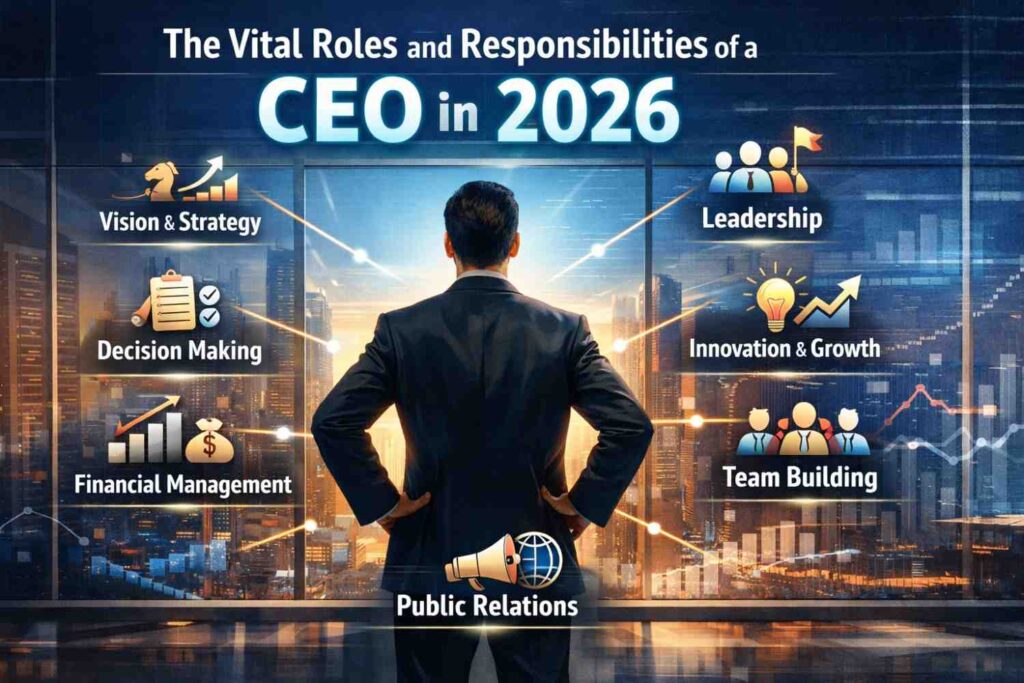
The corporate landscape in 2026 is moving at an unprecedented velocity. Driven by rapid advancements in artificial intelligence, fluid global market dynamics, and a heightened focus on ethical governance, the role of a CEO has undergone a massive transformation. Today, a Chief Executive Officer is no longer just a top-tier manager; they are visionaries, cultural architects, and master diplomats.
Whether you are an aspiring executive, a board member looking to evaluate leadership, or an HR professional drafting a modern job description ceo profile, understanding the contemporary mandates of this office is essential. In this comprehensive guide, Florence Fennel decodes the modern roles and responsibilities of a CEO in 2026.
Defining the Modern CEO
The Chief Executive Officer (CEO) is the highest-ranking operational executive in any organization. While a chairperson of the board protects investor interests and provides high-level oversight, the CEO is the ultimate executor. They own the daily success, failure, and trajectory of the enterprise.
Historically, the ceo job description and responsibilities were heavily skewed toward financial metrics and operational oversight. Today, a CEO must possess immense emotional intelligence, tech-savviness, and systemic agility to navigate the socioeconomic complexities of the modern world.
Top 6 Roles and Responsibilities of a CEO in 2026
To understand the daily operational mechanics of this office, we must break down the ceo duties and responsibilities into their core pillars. At Florence Fennel, we evaluate executive performance across these six critical domains:
1. Vision, Strategy, and Long-Term Direction
The foremost mandate in the roles and responsibilities of a CEO is defining the “why” and the “where” of the organization.
- Setting Strategic Goals: Translating the enterprise’s core mission into actionable, measurable, multi-year milestones.
- Market Intelligence: Maintaining a keen awareness of competitor movements, emerging economic shifts, and disruptive technologies to pivot business models proactively.
- Capital Allocation: Deciding where to deploy financial resources—whether it involves funding internal research, pursuing aggressive mergers and acquisitions, or expanding into international territories.
2. Digital Transformation and AI Integration
In 2026, technology is no longer an isolated IT function; it is the backbone of business survival. A modern ceo job description and responsibilities portfolio mandates active technological stewardship.
- Data-Driven Decision-Making: Moving away from gut-feeling intuition and utilizing enterprise data analytics to make objective, evidence-based choices.
- Ethics in Automation: Overseeing how automation, machine learning, and generative software are deployed within the workforce to maximize output without alienating human talent.
3. Fostering a Robust Corporate Culture and Team Leadership
A perfect strategy will fail if the internal culture does not support it. Establishing a healthy “tone at the top” is a non-negotiable ceo duties and responsibilities parameter.
- Talent Development: Identifying, hiring, and mentoring the rest of the C-suite (such as the CFO, COO, and CMO) and building a resilient leadership pipeline.
- Empathy and Inclusivity: Ensuring that the workplace remains psychologically safe, collaborative, and rewarding, which directly correlates to employee retention.
- Change Management: Helping the workforce navigate structural pivots, restructuring, or mergers without losing operational momentum.
4. Public Relations and Stakeholder Management
The CEO sits at the very top of the corporate ladder and acts as the official public face of the enterprise.
- Investor Relations: Presenting transparent quarterly earnings and growth roadmaps to shareholders and financial analysts.
- Media and Public Presence: Managing crisis communications, hosting press conferences, and building a trusted personal brand that elevates the corporate identity.
- Regulatory Advocacy: Liaising with government bodies, industry trade unions, and legal entities to ensure smooth, compliant operation within regional boundaries.
5. Financial Hygiene and Risk Mitigation
While the Chief Financial Officer handles the granular spreadsheets, the ultimate fiduciary responsibility rests with the CEO.
- Monitoring Profit and Loss (P&L): Reviewing overall organizational budgets, cash flow statuses, and operational expenditures.
- Crisis and Risk Auditing: Predicting geopolitical, cybersecurity, and financial risks, and ensuring the company has built-in buffers to survive sudden market crashes.
6. Corporate Governance and Board Collaboration
A CEO serves as the vital information conduit between daily office operations and the elected Board of Directors.
- Board Alignment: Preparing agendas, attending board assemblies, and presenting objective performance data to evaluate whether the executive team is meeting shareholder expectations.
- Ethical Compliance: Drafting and upholding rigid internal bylaws, anti-fraud protocols, and transparency standards.
Essential Skills Found in a Modern CEO Profile
Successfully balancing these heavy ceo job responsibilities requires a rare, curated blend of interpersonal wisdom and hard-edged commercial logic.
Executive Hard Skills
- Deep Financial Literacy: Fluency in complex balance sheets, global taxation, debt restructuring, and risk modeling.
- Macroeconomic Literacy: Understanding how inflation, supply chain bottlenecks, and global interest rates affect localized business units.
- Advanced Systems Thinking: The ability to see how changing a single variable in a supply chain impacts marketing, finance, and human resources.
Executive Soft Skills
- Unwavering Integrity and Objectivity: Modeling transparency so that middle management operates without fear of bias or retaliation.
- Visionary Communication: Articulating complex, multi-year plans in inspiring, relatable language that keeps frontline workers motivated.
- Extreme Adaptability: Maintaining a cool, analytical demeanor when crises strike. A CEO must absorb organizational stress and project a sense of calm resilience to the workforce.
How the Role Varies by Organization Size
It is important to note that a standard job description ceo template shifts dramatically based on the size and maturity of the company:
- In Startups and Small Enterprises: The CEO takes a hands-on approach. They might participate in lower-level hiring, negotiate directly with vendors, approve marketing campaigns, and wear multiple operational hats.
- In Large Multinational Corporations (MNCs): The CEO operates at a microscopic strategy level. They delegate daily operations entirely to regional vice presidents and department heads, focusing their own time purely on capital allocation, high-level board relations, and macroscopic mergers.
Summary: The CEO as the Ultimate Corporate Anchor
The roles and responsibilities of a CEO in 2026 are as demanding as they are rewarding. It is a position that sits at the intersection of heavy accountability and limitless possibility. By harmonizing data-driven technological adoption with empathetic human leadership, a Chief Executive Officer steers their organization past temporary economic storms toward sustainable, ethical, and profitable horizons.