

Work looks different now than it did before. By 2026, mixed setups—part office, part home—are simply normal. Machines that think handle many routine jobs, changing how people spend their time at work. Pressure doesn’t come only from overtime anymore. Instead, minds get crowded with too much info, always-on messages blur when work ends, and staring at screens all day leaves some feeling alone. The shape of the strain has shifted.
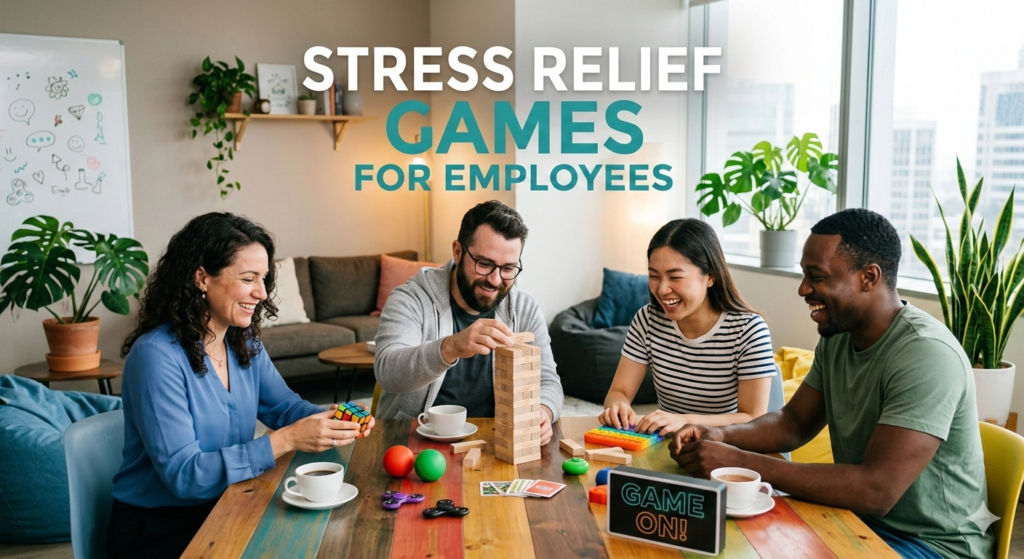
Stress tools, once seen as extras, now stand at the core of how workplaces run. Running strong teams means offering varied stress relief games for employees and calm-building moments—because people work from desks downtown or kitchens miles away. What used to be optional fits right into daily operations now. Different needs show up whether someone’s online or onsite—and responses shift accordingly. Support comes through movement, pause, play – not just policies. The rhythm of work keeps changing, and so do the ways we steady ourselves.
Eleven tasks sit ready for 2026 offices, blending body-aware practices with shared human moments. Movement meets conversation without friction. Each fits like a quiet update to daily rhythm. Science of the body links quietly with how people bond. These aren’t add-ons – they slide between meetings, breaks, routines. Breathing syncs with collaboration. Posture shifts open space for dialogue. Small group patterns emerge naturally. Energy flows differently when motion and talk mix. Bodies learn while voices stay present. Work changes shape without announcement.
1. The Florence Funnel Stress Check
One way workers clear their minds in 2026 starts with something called the Florence Funnel. Though people first turned to it when stuck on tough questions, its real strength shows up when emotions run high at work. Instead of reacting fast, this method pulls apart tangled stress until only solid pieces remain. What feels like chaos becomes something you can name, sort, hold. A cloud splits into droplets – each one clearer than before.
Objective: To move from a vague feeling of “I’m overwhelmed” to a specific, actionable plan.
The Process:
- Broad Inquiries: Employees list everything currently causing pressure. “I have too many emails,” “The project deadline is close,” “I’m tired.”
- Probing Questions: The group or individual narrows these down. “Which specific email is the most urgent?” or “What part of the deadline feels impossible?”
- Closed Verification: Confirming the final action. “If I finish the report outline by 3:00 PM today, will that lower my stress?”
Broad Inquiries: Employees list everything currently causing pressure. “I have too many emails,” “The project deadline is close,” “I’m tired.”
Probing Questions: The group or individual narrows these down. “Which specific email is the most urgent?” or “What part of the deadline feels impossible?”
Closed Verification: Confirming the final action. “If I finish the report outline by 3:00 PM today, will that lower my stress?”
Chaos feeds stress; that much is clear. Yet clarity acts like a brake. Picture workers sorting noise into neat piles. This act alone quiets the mind’s alarm system. Control returns when confusion shrinks. Cortisol fades where order grows. This is why it is one of the essential stress management activities for employees.
2. Digital Sunsets and Right to Disconnect Drills
Right now, staying connected nonstop fuels ongoing stress in mixed work setups. Because of this shift, drawing limits becomes something everyone handles together.
Objective: To practice the physiological transition from “Work Mode” to “Rest Mode.”
One Friday afternoon, right at five, the crew fires off a quick sunset emoji together. Phones go quiet after that message drops. Each person powers down emails and silences apps until seven the next morning. Screens stay dark on purpose. That stretch without pings lasts nearly a full day. Messages wait. Focus shifts elsewhere. The habit sticks – no exceptions. Quiet time rolls in like tide.
A quiet shift happens when stepping back feels ordinary. High-achievers start releasing the tight grip on constant output. Breaks aren’t exceptions anymore – they’re part of rhythm. Guilt fades as pause becomes routine. Worth isn’t tied to motion. Stillness fits without apology.
3. Somatic Grounding with 4-7-8 Breathing
Right when pressure builds, your body shifts into survival mode. Breathing deep helps steady the storm inside you then.
Start by slowing your breath, letting each exhale stretch longer than the inhale. A soft gaze, eyes lowered, helps signal safety to the brain. Try humming quietly – it vibrates the throat where the nerve travels. Gently swallowing five times mimics natural reflex patterns. Cooling the face with water sparks a quiet alertness. Each small act nudges the body toward stillness without force.
- Breathe in slow, filling your lungs completely through the nostrils – hold that rhythm steady across four full beats. A deep pull of air moves into the body when the breath draws upward quietly along the nasal passage. Each second counts, marked by silence, as the chest lifts on the fourth pulse. The timing shapes the motion without rushing what arrives naturally within the pause.
- Breathe stops at seven beats. Seven counts pass before air moves again.
- Puffing out air by parting lips, release breath in eight steady beats. A soft whoosh trails behind each outgoing wave. Count steps inward while emptying lungs low and long.
Here’s how it works. Begin by having everyone try this as a group when meetings kick off. Speed doesn’t matter – what counts is finding the smoothest, most steady rhythm. Watch whose motion flows best over time.
4. Virtual Reality Nature Immersion
Faster than sipping coffee, five minutes inside a virtual forest brings down blood pressure. Come 2026, workers rely on VR just like they once did morning breaks with steam rising from mugs.
Objective: To provide immediate “nature-based” recovery for employees in urban or home-office settings.
Picture this. Staff can grab a headset in the office Quiet Room any time. Remote workers get access to calming VR nature programs instead. A short break begins – ten minutes total. They step into rich, realistic forests or beaches through the screen. The world outside fades just enough. Moments like these reset attention without leaving the building. Time slips slower here. Even brief escapes sharpen focus after. Digital paths lead to real calm.
Here’s why it works. Gazing at patterns found in nature gives your mind a break after staring nonstop at numbers or lines of programming. These repeating shapes seem to reset mental tiredness caused by heavy concentration. The theory behind this idea says natural designs soothe the brain differently than structured digital screens do. This stands out as a top choice for stress relief activities for employees.
5. The Mood Picture Gallery
Here’s how it works: people share feelings easily, even when they struggle to speak clearly. A quiet method opens up space for honesty. Without pressure, someone might say what’s really on their mind. Words come slower sometimes – that’s okay. This setup allows room to breathe while still connecting. Feelings get shared not because they’re polished, but because there’s a path forward.
Objective: To build empathy and emotional intelligence within the team.
A snapshot comes first – someone holds up a picture they snapped on their phone last Tuesday morning. One person passes around a doodle sketched during a quiet moment after lunch. A third flips open their notebook to show a meme saved weeks ago but somehow fits just right. Each image arrives without fanfare, standing in for feelings too messy to name outright. What shows through isn’t always obvious at first glance. Stillness lives inside some photos; others vibrate with hidden noise. The room listens while meanings unfold slowly, like clouds shifting shape overhead.
Noticeable shifts in mood or energy might signal stress before it grows. Team members who talk openly often find others willing to listen. Early warnings mean quicker responses. Shared moments build stronger connections over time.
6. Blindfolded Sculpting Trust and Touch
Fingers moving through clay instead of tapping keyboards – that shift alone can loosen tight thoughts. A lump of dough passed hand to hand slows the rush of emails and deadlines. Touch replaces typing, just for a while. Minds wander differently when they’re shaping shapes without screens. This exercise doesn’t fix everything – still it offers pockets of quiet inside busy days.
Finding ease by playing more. Through touch and sound, thinking feels lighter. A different path opens when hands move freely. Focus shifts without force. Quiet moments grow stronger here. Learning sneaks in through motion. Attention stays without pressure. The mind rests while doing something real. This is a unique addition to stress management games for employees.
A shape begins to form under one worker’s fingers. With eyes covered, they handle soft clay while another speaks nearby. A description flows – slow, careful – from someone standing close. That voice paints something small, maybe alive, perhaps built by hands too. Listening closely, the first person shapes what they hear. An idea takes physical form without sight guiding it. Words become curves, edges, volume. Each detail added comes through speech alone. The result might look rough, not perfect. Still, it carries meaning beyond appearance.
Laughter takes hold when you see a lumpy blob pretending to be a bird, leaving little room for email stress. Touching cool, soft clay pulls attention down into the moment, almost without notice.
7. Biofeedback Walking Challenges
Running through city streets burns stress away. By next year, fitness trackers push people forward.
Staying active on purpose helps lower daily tension. Movement each day keeps the body ready, not reactive. When muscles work, minds often quiet down. Routine exercise builds resilience without force. A steady pace today supports balance tomorrow. Physical effort shapes how we handle pressure. Action becomes armor over time.
Try something different. Swap step counts for how well bodies bounce back. Workers check their watches each day, watching Heart Rate Variability rise or fall. A higher score means better rest and balance. Movement helps, especially walks taken regularly. Sleep matters just as much – consistent bedtime routines lift results. Small daily shifts add up slowly. Progress shows on screen, not just in energy levels. Some see changes fast; others take weeks. The goal is steady improvement, not speed records. Numbers climb when habits stick. Quiet nights plus calm mornings open space for gains. Recovery becomes visible, one beat at a time.
What matters most isn’t pushing harder. Recovery becomes the main event instead. Effort takes a back seat when healing leads. Progress hides in rest, not motion. The real gain comes after the work ends.
8. The “Two Truths and a Calm” Icebreaker
Here’s something different – built from the ground up to help workers handle pressure during team exercises. Instead of following old formats, it shifts focus toward calming strategies through play. Not just another version of what’s already out there, it fits into workplace routines without feeling forced. What you get is a tool that feels familiar yet works in new ways. This is a classic example of stress relief games for employees.
Sharing what works helps everyone find their way through tough moments together.
A single thing someone said earlier kept replaying in their head – this made sleeping hard. A meeting ran late, spilling into time meant for walking outside. Yet water on skin during a shower slowed everything down. Others tried figuring out which of those moments brought real relief.
Breathing room shows up when emotions spill out, yet fresh solutions often tag along. Ideas scatter at first, still they gather into something useful later on.
9. Desk Yoga with Progressive Muscle Relaxation
Tightness across your neck and shoulders usually shows up when your mind feels heavy. This method quietly unravels what gets locked into the body.
Objective: To identify and release subconscious muscle tension.
Begin at the feet. Hold tension in every muscle cluster all the way upward toward the head for five full counts before letting go fast. Each section tightens one after another – then snaps loose without warning.
Ah, tension hides in plain sight. Most folks ignore tight jaws, stiff shoulders – blind to the squeeze. Only when reminded do they finally let go. Surprising how much we carry without noticing. These are powerful stress management activities for employees.
10. The Office Pet Slack Snaps
When dogs aren’t allowed at work, a virtual alternative might ease tension just as well. A screen-based pet could fill the gap where real ones can’t go. Sometimes pixels calm nerves like paws do. Not every workplace welcomes animals, yet software companions offer quiet comfort anyway.
Objective: To facilitate “Micro-Restorative Moments.”
Pets get their own space online. Studies found viewing animal images helps slow the heartbeat. A separate spot just for them makes sense.
Once each month, try a Zoom meeting just for pets to show up. Start it off without any real plan except letting animals say hello. Every pet gets time in front of the screen. Meetings like these skip work talk completely. Fur, feathers, or scales – all are welcome. Watching cats nap mid-call often steals the spotlight. Some dogs bark at other faces onscreen. Laughter usually fills most of the minutes. These moments slow things down in a good way. A single hour can feel longer when a hamster explores its owner’s desk. End it before anyone feels done.
11. No Meeting Mondays and Focus Time
A single quiet hour can matter more than a dozen frantic ones. Workers gain clarity when interruptions stop. Picture fewer meetings, just space to think. Focus grows where chaos once lived. Imagine doing deep work without constant pings. Time becomes useful again. Silence replaces clutter. Energy stays instead of draining away. The mind works better undisturbed. Remove the noise, watch performance rise.
Objective: To reduce “switching costs” and allow for deep, satisfying work.
Mondays stay clear of meetings, just quiet time to work. Each day also has Focus Blocks – messaging tools go dark then. Silence kicks in so attention can stay sharp. No pings, no alerts, just space to think. These times guard against constant interruptions. Work flows better when notifications pause. People settle into tasks without digital noise. Calm stretches out across the hours. Distractions shrink when screens stop flashing. Attention grows stronger in stillness.
Most folks feel better when they stay focused. Jumping between tasks drains energy fast. A steady rhythm gives mental space to thrive. Fewer disruptions mean deeper concentration kicks in. This natural groove feels good without extra effort. The mind prefers smooth stretches of attention. Constant switches create tension over time. Staying on one thing builds a quiet sense of progress.
Stress Management Gives Edge in 2026
Imagine what happens when teams play more during work hours. Numbers from 2026 show firms using stress management games for employees lose fewer people – down by nearly three out of ten – and ideas flow better across departments. When pressure builds, it’s not only mood that suffers; the brain itself changes. The prefrontal cortex, where solutions are born, powers down under strain.
Implementation Success Tips
A single moment of rest from a boss can speak louder than rules on paper. When leaders skip screen breaks, others notice they should too. Relief only sticks when those at the top step away first. Culture shifts not by policy but by who goes first into quiet. It takes visible pauses from managers before teams trust their own.
Five minutes of breath work each day helps your nerves more than one big trip yearly. Most think grand efforts win, yet tiny repeats do. Not size but frequency shapes results. Regular pauses rewire stress patterns better. One long break feels good, sure – still daily rhythm builds resilience slowly. Small things pile up where big leaps fall short.
Florence Funnel helps spot stress points when teams talk. One question at a time, it pulls out what grinds work to a halt. Through that lens, workers name the real snag slowing them down. Then, step by step, noise fades into one clear task. Focus lands where change can actually happen. Clarity comes not from guessing, but asking. The heaviest burden gets named – then shaped into action.
Throw in these 11 moves, your crew doesn’t only lift their mood – resilience grows quietly, movement becomes natural. Complexity? It folds into step by 2026, keeps unfolding after.