

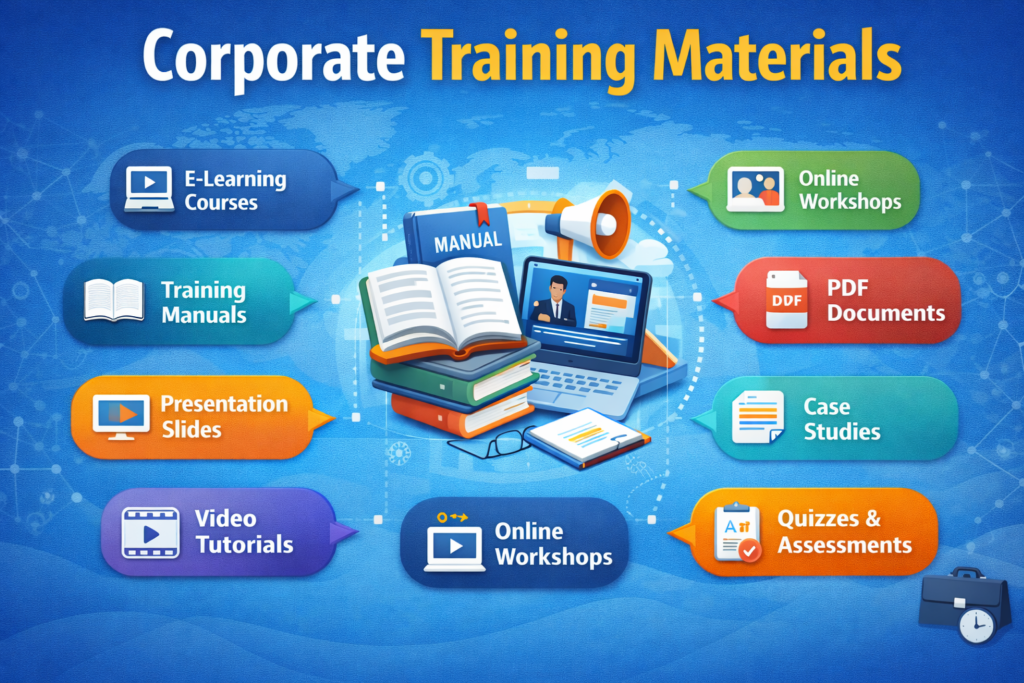
The desire to know more motivates people to remain engaged. Hands-on training is now much more common than formal lectures. Productive concentration is more about undertaking tasks that have real significance than it is about finding quiet. When seeking a corporate event speaker, a firm should look for someone who delivers results rather than just fills seats. It is only when learning results in action, when the facts and skills acquired are put into practice, that it has any real value. It is generally easier for people to comprehend material when using good tools. Guidance is beneficial in enhancing the outcome. It is more important to know than to be known. Clear objectives and tasks facilitate clear and focused action by a team.
Shape shifts in how we work—more time at home, more blending of spaces—one truth holds steady. In this day and age, the traditional teaching methods used in schools do not fit the needs of today’s children. Traditional learning methods cannot keep pace with the speed of modern life, where people have to learn rapidly and new information becomes available by the hour through the internet. As a result, educational procedures should evolve too. Corporate training materials must be designed around real challenges employees face on the job right now, rather than outdated theories. The value of any old guide or instruction is, essentially, short-lived, while the advice people really follow is that which feels current and relevant.
Corporate training materials become more significant
The corporate training materials for employees begin with software and tools developed by the company itself and then teach the user in stages. Upon having grasped concepts, people only learn by practicing the ideas in question. As communication passes from one group to another, the clarity of the message does not fade.
Strong training materials help people learn better
Faster skill development
Following a change in the pattern of job distribution, people began to demonstrate greater interest in job opportunities. A higher work rate was brought about by changes to task assignments between teams. People listened more intently once the person being spoken to changed. The introduction of fresh team structures brought the focus to bear across the departments. Changes within the ruling structures were accompanied by the increased occurrence of protests.
Understanding the Learner by 2026
It is now clear that the best way to find out what is truly important to staff is by observing how they spend their time at work. It is only when training methods are aligned with real learning moments that the learning process will improve. When training is aligned with real life, then it is better retained. People learn concepts more easily when they are related to real life. The way people spend their time indicates what is effective. It is only when the old approaches are abandoned that discoveries can be made, beneath what has previously been known. Life is different with your eyes open.
Tips for Creating Corporate Training Materials in 2025
Below are practical tips for creating corporate training materials that align with modern workplaces and evolving employee expectations.
Learning Goals Set
At the outset, a careful and detailed understanding of organizational needs is essential. Training programs should be shaped by clearly defined objectives. Effort wanders when clarity fades, but purpose guides every step forward.
Why Learning Objectives Matter
-
Guide content creation
-
Set clear expectations for learners
-
Enable measurable outcomes
When clarity of purpose directs decisions, distractions fall away and training efforts become more focused and impactful.
Break Content Into Small Independent Pieces
Big classes are out of favor with business at present. Extensive training data, once required for any project, is now being replaced by smaller subsets of data. The work environment has shifted, with faster information streams prevailing over comprehensive guides. Individuals often utilize downtime to learn new skills through the internet as opposed to dedicating large blocks of time to the same. We are living in a fast-moving world where things change at the speed of light, and everything has to be learnt and adapted quickly.
Benefits of Microlearning
- Short, focused modules
- When you return, clarity follows quickly, requiring no extra work. One fleeting glimpse makes everything immediately clear.
- It manages to insert itself between a pair of meetings that run consecutively. It finds comfort in times of time constraints. It’s simple and intuitive to use. They could be hiding in the most unlikely places. Deep calm in the midst of the hustle. Blends in like background noise that somehow helps
It can be less complicated to approach problems if we take them apart into smaller pieces. Breakdown of complicated points into simpler elements prevents misunderstanding. Ideas tend to clarify themselves more easily when they are set out in a step-by-step manner. The longer one waits to study the material, the more difficult it is to learn. In situations where quick action does not bring success, it is those who are patient who come out on top.
Incorporate Digital and Interactive Elements
Viewers are now looking for new things on television—things that change, move, and are alive. Navigation used to feel like walking down empty corridors in complete silence.
Effective Digital Elements
- Videos and animations
- Interactive quizzes
- Scenario-based simulations
- Gamified learning modules
Practical Focus on Real-World Applications
Their workplace requirements determine the effectiveness of any training program. When the workshop or training session matches up with what is required on the job, things begin to improve. When people overcome personal challenges, people pay attention. Those things we learn through daily tasks are remembered for longer periods. Engaging feedback draws more people into the conversation. There is more value in being able to recall knowledge in real-life situations than there is in simply recalling facts in an exam. The true benefits of learning come from its practical application. It is not just the ideas that are learned that are valuable, but also how these ideas can be used in everyday life. Talk is cheap; people must demonstrate their commitment by action,, not just by words.
Hybrid and Remote Team Design
Flexible equipment is what engineers recommend in this work. Materials that are able to move with a smooth motion can adapt to changes in conditions without sustaining damage.
Key Design Considerations
- Mobile-friendly formats
- Cloud-based access
- Self-paced learning options
When the learning process is aligned with the natural rhythms of students, they learn more efficiently. At any moment, a student can log on to their computer and get to the course material. Some sign up in the evening, others between their meals, and at a time to suit themselves. Moments that stand out are taken by each person.
Use visual and instructional design principles
A well-designed rearrangement of the material studied by the pupil may lead to unforeseen gains in knowledge. Well-laid-out forms that display a suitable color scheme provide information clearly without having to shout.
Design Approaches That Work
- Clean layouts with minimal clutter
- Consistent branding and structure
- Use of visuals to simplify complex concepts
The structure of a website or webpage influences the speed at which its content is downloaded and made visible on the screen. A clutter-free environment can help you retain information better – your surroundings are tidy and organised, so your mind can concentrate on the task at hand.
When possible, shape education your way
Thoughtful actions often inspire people more than grand gestures do. It is often small decisions we make that have a significant impact on just one person. The users tend to focus on a service once they sense that someone has put some thought into it. The ordinary nature of everyday interactions makes them memorable when they’re perceived as deliberate.
Personalization Strategies
- Role-specific learning paths
- Adaptive content based on skill level
- Optional advanced modules
Lessons and activities that cater specifically to your needs and interests are more engaging. When learning mirrors the environment in which it is found, its retention is much stronger. Knowledge seems more meaningful when it ties in with your daily life. Instructions tailored to an individual’s pace, in fact, prove beneficial in key areas.
Keep your ideas up to date by regularly reviewing your plans and forecasts.
When you are doing this assessment, consider the shifts that are predicted to take place in the future.
The use of outdated learning technology can hinder students from achieving their full potential and is slowing the educational process. The recentness of the data becomes apparent through its modernity. Manuals published yesterday might confuse people. Current lessons usually fit better. New information constantly comes into the picture and obscures older events. But what really holds up progress is something much simpler. Staying on pace counts way more than you’d think right away.
Staying Updated
- Regular content reviews
- Incorporate emerging trends and skills
- Regular updates should reflect real-life situations that occur after the production of the system.
These updates would cover things such as changes in laws and regulations.
The day can start with the formation of learning paths that can adapt to shifting work requirements. As technology advances, people acquire new skills gradually. As training progresses, the actual adaptability of the learning algorithm is most clearly shown. Preparation is more valuable than speed.
Effective corporate training materials
Companies will need to concentrate on a few things when it comes to creating the best corporate training materials for staff in the year 2026, for example:
- Start with clear objectives
- Keep content concise and modular
- Make learning interactive
- Design for accessibility and flexibility
- Measure effectiveness consistently
What makes top company learning tools stand out?
The most effective corporate training programs possess some common attributes:
- Learner-centric design
- Practical application
- Digital-first approach
- Clear structure and visuals
- Measurable learning outcomes
Their presence has a catalytic effect, motivating others. They also give back to their communities by sharing their expertise. Others may be motivated to increase productivity when they see someone leading by example.
Conclusion
The learning of the future combines cutting-edge educational theory with the latest in technology. The manner in which a course is designed has a significant influence on its outcome. The change in customer demographics or market conditions often leads to innovative teaching strategies by companies. These are approaches that bring results in the long term, keep track of the growth and continue to engage customers. With robust training, the skill levels of your staff will improve, enhancing the output of the project and preparing the staff for any challenge that may arise in the future. The quality of work would certainly be of a high standard.
Adept at developing bespoke instructional designs, Florence Fennel provides training strategies tailored to meet a company’s actual business needs. In particular, her considerable experience has been gained from establishing and developing corporate training initiatives. Given her knowledge of how businesses change over time, it is natural for her to put together training programmes of value. She has a knack for breaking down large projects into their simplest elements so others can easily follow.