

Measuring training ROI matters a lot for today’s L&D teams. Companies spend big on upskilling efforts, leadership projects, or boosting abilities – yet if there’s no solid way to track results, it’s hard to tell if those trainings lift performance, cut expenses, or support key objectives. Using a clear method lets managers back their spending choices, fine-tune upcoming courses, and match learning wins with company demands.
To make this work, you need a clear and hands-on approach to determining training ROI. How to Measure Training ROI becomes easier when each learning program ties directly to real results—so companies can actually see what’s working. This straightforward walkthrough covers the steps, math, and measurements, plus how to review everything so your ROI numbers come out right – and stay reliable.
Why Training ROI Matters
Training payback isn’t just about money – it shows wider business impact. At work, development efforts affect output, rule-following, staff motivation, fresh ideas, also how clients feel. Still, if you don’t measure things right, solid training might seem like an expense instead of a smart move.
Understanding corporate training ROI helps organizations:
- Make data-driven decisions about future training budgets
- Figure out what initiatives boost company results the most
- Drop workouts that don’t work
- Demonstrate the strategic value of capability development
- Match practice with clear progress markers
- To figure out if training pays off, firms should mix performance data with skill checks – back it up with real actions on the job through a solid approach.
A Practical Step-by-Step Guide to Measuring Training ROI
Step 1: Define Training Objectives and Success Metrics
Before rolling out a course, the team needs to pin down what winning actually means. Since goals connect learning to real company results, judging returns gets easier. When targets are set, picking useful measurements shows how well the training really works.
Examples of measurable objectives include:
- Boost how much each sale makes by some number
- Reduce operational errors
- Boost how happy customers are with your service
- Enhance employee retention
- Speed up how fast projects get done
Setting clear goals when designing company training helps everyone – HR, supervisors, and team members – stay on the same page. Plus, it gives the business a way to gather initial and follow-up stats needed to measure returns.
Step 2: Determine the Costs of Training
A key part of figuring out training ROI means tracking down every dollar spent. Not only does that cover what you paid for the course, but things like staff time count too – so don’t skip those.Common cost components include:
- Tutor pay
- Learning materials
- Online tools or study setups
- Worker’s absence from the job
- Assessment tools
- Admin costs, along with oversight tasks
- Figuring out costs right helps a company see exactly where money’s going—this also sets the stage for checking returns down the line.
Step 3: Measure Learning Outcomes
Figuring out the results shows if people picked up what they were supposed to learn. The goal here is to check how much staff actually absorbed from the training.
- Methods include:
- Written assessments
- Skill demonstrations
- Post-training quizzes
- Simulations or role-plays
- Practical competency evaluations
- Tracking progress clearly helps the program hit its teaching goals. Besides that, it adds to what’s required for figuring out ROI.
Step 4: Evaluate Behavioral Changes on the Job
Learning goals by themselves don’t cut it. Because to figure out training payoffs, companies need proof people actually use what they learned on the job. Watching how actions shift helps—along with checking actual output once sessions end
- Techniques include:
- Manager evaluations
- Peer feedback
- Performance dashboards
- Activity tracking
- Productivity metrics
- Task precision or checking results
- Companies ought to gather info at different times – like 30, then 60, finally 90 days post-training – to see lasting changes in behavior.
Step 5: Measure Business Impact
Business impact means the clear outcomes from training – it’s what makes ROI real. That’s where solid measurement starts. These numbers need to match up with the goals set before, otherwise they don’t mean much.
Results that show real changes in how a company performs:
- Rising income or selling more stuff
- Cut expenses or eliminate clutter – save more without hassle
- Higher customer satisfaction
- Lower turnover
- Faster project completion
- Improved compliance metrics
- Pulling together this info helps the company connect training efforts to how well it’s doing work-wise—using real results instead of guesses.
Step 6: Learn How to Calculate ROI for Training
After gathering expense details along with outcome results, a group uses the usual ROI method.
- Figuring out ROI on training? Start here
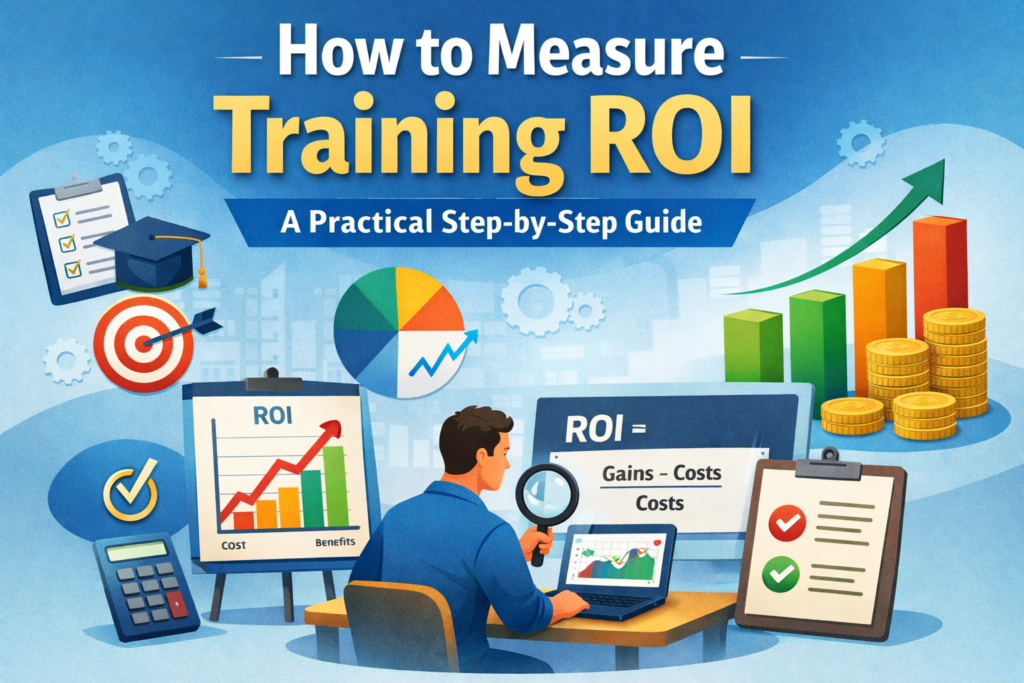
- ROI (%) = ((Total Benefits – Total Training Costs) / Total Training Costs) × 100
- Total benefits add up from money saved, lower costs, or better output thanks to training.
- Training Costs cover every expense figured out before.
If the outcome shows a positive percentage, then learning actually helped. When it’s below zero, tweaks might be needed – either in how it’s built, shared, or supported after.
Using Corporate Training Methodology to Strengthen ROI
A clear training approach shapes how well staff pick up and use fresh abilities. When the method’s solid, it boosts chances for real habit shifts along with noticeable gains at work.
Effective methodology includes:
1. Needs Assessment
Finding weak spots means learning hits the right areas – so it actually helps.
2. Curriculum Design
Classes ought to focus on useful abilities you can actually use – so they fit real-life needs without fluff or hype.
3. Engaging Delivery Methods
Hands-on activities, live examples, or interactive apps help you remember better.
4. Reinforcement and Follow-Up
Guided help plus regular prompts keep skills in use through hands-on training.
5. Continuous Assessment
Frequent checks along with quick responses keep track steadily.
6. Data-Driven Evaluation
Keeping tabs on progress regularly builds trust while making things clear.
Once combined, companies see better returns – alongside improved team skills and smoother training results.
Common Challenges in Measuring Training ROI
Even though it matters, checking how well training pays off isn’t always straightforward. Companies usually run into issues like –
- Tough to separate how much progress came from practice, given everything else going on
- Limited ability to view how well things work
- Inconsistent or unclear objectives
- No follow-through once the training ends
- Insufficient managerial involvement
Beating these hurdles takes real effort, clear numbers, and one step at a time. Folks who stick to a plan usually see measuring returns get simpler as months go by.
Conclusion
Knowing what return you get from training helps show if programs are worth it. When goals are set right, expenses tracked, results checked, and behavior shifts noted, then the impact on work becomes clear—so decisions improve. At Florence Fennel, a solid approach to company learning makes training efforts more effective while aligning with broader business objectives. Stick to regular reviews, and gains will grow, helping teams become sharper and stronger over time.